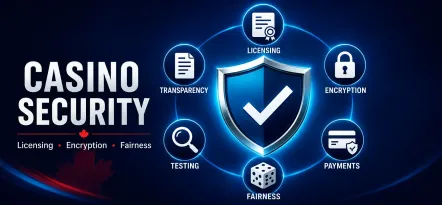
Online casino security is often discussed in terms of a single feature, such as licensing or encryption. In practice, trust comes from several layers working together.
Large bonuses and impressive game libraries often attract attention first. Security, on the other hand, tends to become important only when something goes wrong. Most players rarely think about licensing, encryption, or dispute procedures until they actually need them.
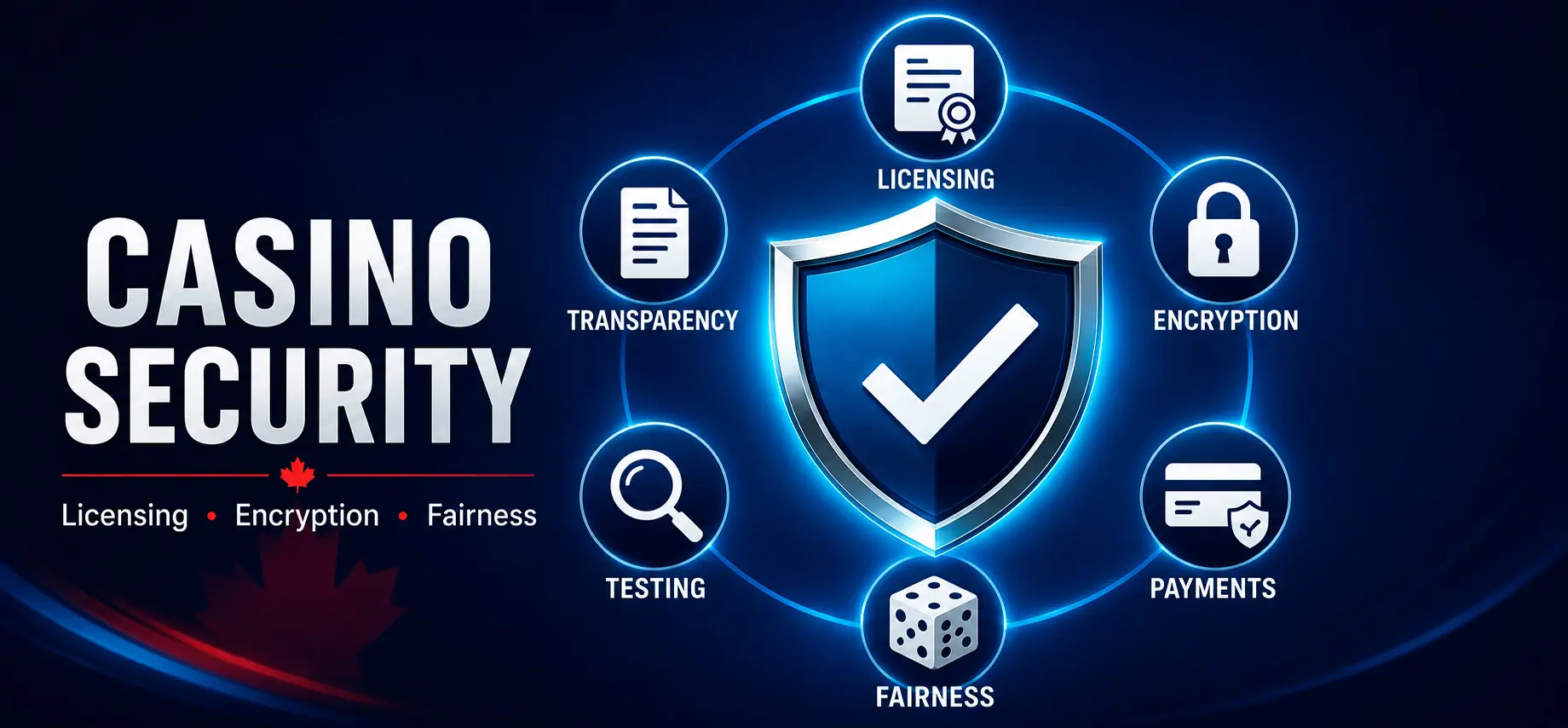
A trustworthy casino is not defined by flashy promotions or the number of games it offers. Confidence usually comes from a combination of regulatory oversight, secure technology, transparent policies, independent testing, and tools designed to help protect players.
For Canadian players, understanding these fundamentals can make it easier to distinguish established operators from sites that deserve closer scrutiny.
In Canada, players may encounter both Ontario-regulated operators and international casinos licensed in other jurisdictions. That makes it especially important to understand which trust signals actually matter.
Why Security Matters in Online Casinos
When you register with an online casino, you share personal information, payment details, and, in many cases, identity documents. Players also expect games to operate fairly and withdrawals to be processed reliably.
Trust is often invisible. When deposits work smoothly, withdrawals arrive on time, and games behave as expected, few people stop to think about the systems operating behind the scenes. Yet those systems are exactly what separate established operators from questionable ones.
Strong security helps:
- protect sensitive information;
- reduce fraud risks;
- ensure games operate fairly;
- support responsible gambling;
- provide clear procedures when disputes arise.
No single safeguard is responsible for all of this. Instead, several layers work together to create a safer environment for players.
How Licensing Helps Protect Players
Licensing remains one of the most important elements of online casino security.
A license means that an operator has agreed to follow standards established by a regulatory authority. These standards often cover areas such as:
- game fairness;
- responsible gambling measures;
- anti-money laundering procedures;
- protection of player funds;
- operational transparency.
Without regulatory oversight, players may have limited options if problems arise.
Interestingly, licensing often feels abstract to new players. It becomes far more meaningful if a dispute appears or a withdrawal issue needs to be resolved. At that point, regulatory oversight is no longer just a logo displayed in the footer—it represents accountability.
Licensing does not guarantee perfection, but it creates a framework that operators are expected to follow. That framework is one reason licensing carries so much weight when evaluating online casinos.
Major Gambling Regulators Canadian Players May Encounter
Canadian players may come across casinos operating under several recognized regulatory frameworks. Ontario currently represents Canada's most clearly regulated online gambling market, while players in other provinces often encounter operators licensed in international jurisdictions.
Understanding where a casino is licensed can provide valuable context about the standards and oversight players can reasonably expect.
AGCO and iGaming Ontario
In Ontario, regulated operators work within a framework involving the Alcohol and Gaming Commission of Ontario (AGCO) and iGaming Ontario (iGO).
These organizations help establish standards related to consumer protection, responsible gambling, and operator conduct.
For many players, Ontario's regulated market serves as a useful reference point when evaluating security and transparency standards.
Malta Gaming Authority
The Malta Gaming Authority (MGA) is one of the best-known regulators in the industry. Many international operators serving Canadian players hold MGA licenses.
Gibraltar
Gibraltar has long been associated with major gambling companies and maintains licensing standards focused on compliance and operational oversight.
Curaçao
Many international casinos operate under Curaçao licenses. Recent regulatory developments have focused on improving transparency and strengthening supervision.
Rather than comparing jurisdictions aggressively, it is usually more helpful for players to understand that licensing introduces accountability and creates expectations that operators are expected to meet.
In many cases, licensing information can be found in the website footer or within the casino's terms and conditions, making it one of the easiest trust signals for players to verify.
Why SSL Encryption Matters
One of the simplest signs of a secure website is encrypted communication.
This protection is commonly provided through SSL technology.
SSL encryption helps safeguard information transmitted between a player's device and the casino website. This includes:
- login credentials;
- personal information;
- payment details;
- account activity.
In practical terms, encryption helps reduce the risk that sensitive information could be intercepted during transmission.
Most well-established operators use modern encryption standards as part of their security infrastructure. Players can often recognize secure connections by the padlock symbol displayed in modern web browsers.
How Payment Information Is Protected
Payment security involves more than simply processing deposits and withdrawals.
Reliable operators use systems designed to protect transactions and verify account ownership.
Important safeguards may include:
- encrypted payment processing;
- identity verification procedures;
- fraud prevention measures;
- transaction monitoring;
- secure account recovery systems.
Casinos also tend to rely on established payment providers that already maintain strong security standards.
For Canadian players, payment reliability is closely tied to overall confidence in an operator.
What RNG Means and Why Fairness Matters
Game fairness is another piece of the puzzle.
Most online casino games rely on RNG, which stands for Random Number Generator.
An RNG is designed to ensure that outcomes remain unpredictable and independent.
This means:
- previous spins do not influence future spins;
- results are not manually controlled;
- each outcome is generated randomly.
RNG systems help create fairness by preventing patterns or manipulation.
They also explain why short-term results can differ greatly from long-term expectations. A game may have a theoretical RTP of 96%, yet individual sessions can vary widely.
Understanding RNG helps players recognize that casino games are based on probability rather than guarantees.
How Independent Testing Laboratories Verify Games
Game providers and operators are not expected to verify fairness themselves.
Independent laboratories conduct audits designed to test and certify gaming systems.
Some organizations commonly encountered in the industry include:
eCOGRA
eCOGRA is known for auditing game fairness, operational standards, and responsible gambling practices.
iTech Labs
iTech Labs evaluates game randomness and software integrity across multiple jurisdictions.
Gaming Laboratories International (GLI)
GLI is one of the largest independent testing organizations and provides certification services in regulated markets around the world.
These companies add another layer of transparency by examining systems independently rather than relying solely on operator claims.
Independent testing does not eliminate every risk, but it does help reinforce confidence in how games are designed and monitored.
What Makes an Online Casino Trustworthy?
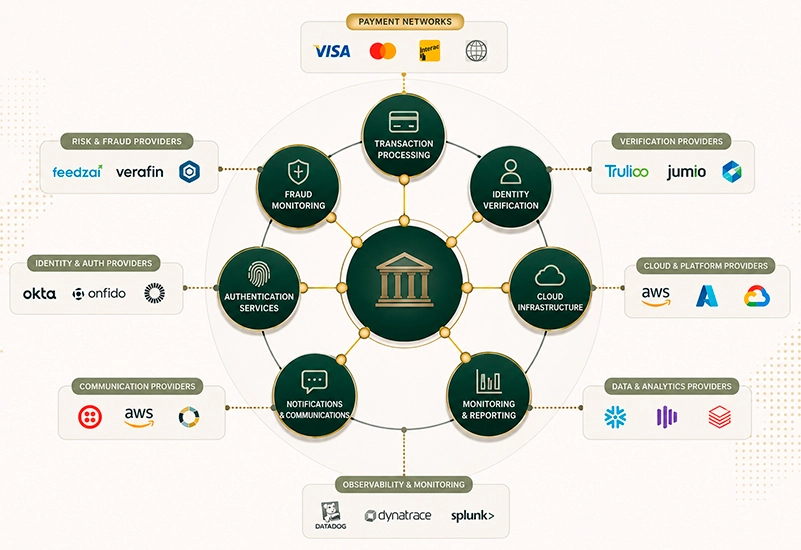
How Reputable Casinos Build Trust
Trust rarely comes from a single feature.
Players do not usually decide that a casino is reliable because of one certificate or one payment method. Confidence tends to grow over time, through dozens of small interactions that consistently work as expected.
Clear communication, transparent terms, responsive support, and straightforward payment processes often matter just as much as technical safeguards. Players may not notice these details immediately, but they quickly notice when they are missing.
There is no single moment when players decide a casino is trustworthy. More often, confidence develops gradually. Over time, the most reliable operators tend to share several characteristics:
- recognized licensing;
- encryption technology;
- secure payment systems;
- independently tested games;
- transparent terms and conditions;
- responsive customer support;
- responsible gambling tools;
- clear communication.
Player protection tools also contribute to that sense of trust.
Examples include:
- deposit limits;
- loss limits;
- cooling-off periods;
- self-exclusion options.
These features are designed to support healthier gambling habits without interfering with player choice.
Warning Signs Players Should Not Ignore
Problems rarely announce themselves through a single issue. A single concern does not necessarily indicate a serious problem, but multiple warning signs appearing together usually deserve closer attention.
Potential concerns include:
Missing or unclear licensing information
Established operators generally disclose licensing details openly.
player protection tools
Offers that appear too good to be true deserve additional scrutiny.
Unclear terms and conditions
Complicated or vague policies may indicate poor transparency.
Repeated complaints about payments
Persistent reports of delayed withdrawals or unresolved disputes should not be ignored.
Lack of customer support
Limited communication channels or unresponsive support teams can create unnecessary difficulties.
Poor transparency
If information about ownership, terms, or responsible gambling resources is difficult to find, players may want to proceed cautiously.
One issue alone does not automatically mean a casino is unsafe, but several warning signs appearing together should encourage closer examination.
Simple Security Checklist for Canadian Players
Before registering with an online casino, players can ask a few simple questions:
✓ Is licensing information clearly displayed?
✓ Does the casino clearly explain which jurisdiction regulates its services for Canadian players?
✓ Does the website use secure connections?
✓ Are payment methods reputable?
✓ Are terms and conditions transparent?
✓ Are responsible gambling tools available?
✓ Are games independently tested?
✓ Is customer support easy to contact?
✓ Is information presented openly and clearly?
None of these checks require technical knowledge. In most cases, spending a few minutes reviewing basic information can reveal far more than any advertising campaign or promotional headline.
Final Thoughts
Online casino security is easy to overlook because the strongest protections are often the least visible.
Players naturally focus on games, bonuses, and promotions first. Yet licensing, encryption, independent testing, and transparent policies usually have a much greater influence on the overall experience—especially when unexpected situations arise.
No regulator, certificate, or technology can guarantee perfection. Still, operators that consistently prioritize transparency and player protection tend to inspire confidence over time.
For Canadian players, understanding these fundamentals is less about becoming an expert and more about knowing what deserves attention before creating an account.
In the end, players rarely judge a casino by its marketing claims. What tends to matter far more is how the platform performs when deposits, withdrawals, customer support, or disputes become important. Trust is rarely created by a single feature. More often, it grows quietly through reliability, transparency, and consistency over time.
FAQ
Are online casinos safe for Canadian players?
Many licensed operators provide strong security measures, but players should still verify licensing, payment systems, and transparency before registering.
What does SSL encryption do in online casinos?
SSL encryption helps protect sensitive information such as login credentials and payment details while information travels between the player and the casino website.
What is RNG in online casino games?
RNG stands for Random Number Generator. It helps ensure that game outcomes remain random and independent.
Who tests online casino games for fairness?
Independent organizations such as eCOGRA, iTech Labs, and Gaming Laboratories International (GLI) conduct testing and certification procedures.
What is the most important sign of a trustworthy casino?
There is no single factor. Licensing, transparency, secure payments, independent testing, and responsible gambling tools work together to create a safer environment.