Bankroll management does not change the odds, but it can make spending easier to control. For adult players in Canada, the goal is simple: decide what you can afford to lose, divide it sensibly, and avoid emotional decisions once play begins. These bankroll management tips for Canadian casino players are about control, not profit.
What Bankroll Management Actually Means
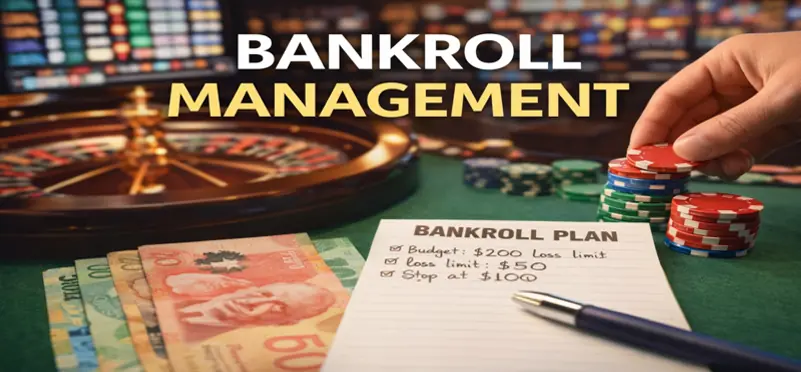
A bankroll is the amount of money a person sets aside specifically for gambling. It should not be mixed with rent, groceries, bill payments, emergency savings, or other essential expenses. In practice, bankroll management means deciding how much to spend, how much to risk in one session, and when play ends.
A useful bankroll plan usually includes:
- set a fixed gambling budget
- separate it from everyday money
- decide limits before playing
- avoid changing the plan mid-session
It sounds simple, but the separation matters. When gambling money comes from the same pool as daily spending, extra deposits become easier to justify and overspending becomes harder to spot.
Why Bankroll Management Matters for Casino Players
Without a plan, a bankroll can disappear quickly. Strong bankroll control slows spending, reduces impulsive decisions, and keeps sessions inside a defined limit. It also keeps expectations more realistic. Casino play is unpredictable, so the more useful question is not “How much can I win?” but “How much am I willing to spend on entertainment?”
Good casino budgeting also lowers the chance of emotional decisions. A player who already knows their loss limit, time limit, and stop point is less likely to chase losses or keep playing to recover money quickly.
Start With a Fixed Gambling Budget
The budget should be chosen before a session starts, not during it. It must be money a person can afford to lose without affecting essentials. That means no overlap with rent, utilities, debt payments, groceries, or savings goals. Repeated top-ups weaken the system because they turn a fixed budget into a moving target.
A simple example: someone sets a monthly gambling budget of CAD 200. Instead of adding more money after a bad session, they treat that CAD 200 as the full limit for the month. Once it is gone, play stops until the next budget period begins.
Set Limits Before You Start Playing
A session plan is easier to follow when the rules are decided in advance. A practical checklist may include:
- Loss limit: the maximum amount you will lose in that session
- Win limit: a point where you stop rather than give winnings back
- Time limit: a fixed session length, such as 45 or 60 minutes
- Deposit limit: if the platform offers one, set it before playing
- Session stop point: a clear rule for ending play, even if emotions say continue
Session limits help because decisions made before play are usually calmer than decisions made after a losing streak or an unexpected win.
Bet Sizing Matters More Than Most Players Think
Stake size affects how long a bankroll lasts. Large bets can drain it quickly, even when the overall budget looks reasonable at first. Smaller bets usually allow more rounds or spins, which makes spending easier to pace.
This matters even more in higher-volatility games, where outcomes can swing sharply. The same bankroll lasts very differently depending on stake size. A CAD 100 bankroll used with small bets may last across several sessions. The same CAD 100 used on much larger stakes may be gone in a short stretch.
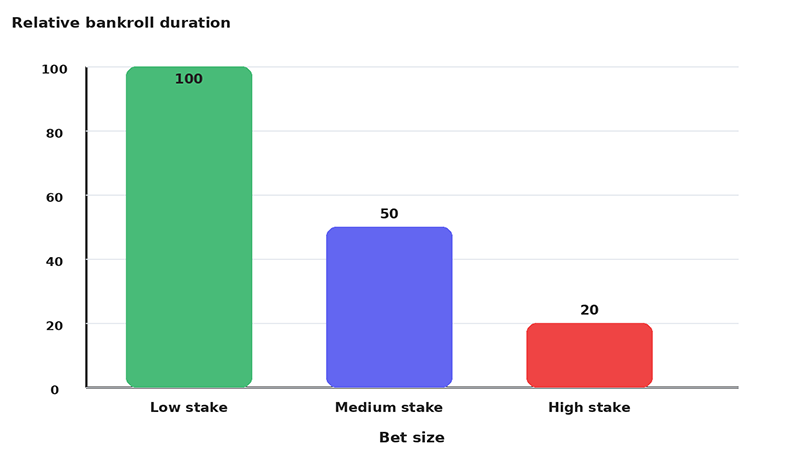
How Bet Size Affects Bankroll Duration
How to Divide a Bankroll Across Sessions
Using an entire bankroll in one sitting is risky because it leaves no room for pauses or recovery after a bad run. Splitting a weekly or monthly budget into smaller sessions usually makes spending easier to predict.
Example: CAD 200 divided into four sessions of CAD 50 each. That structure helps in two ways. First, it prevents one impulsive session from using the full amount. Second, it leaves a reserve for later rather than forcing a redeposit after one rough night.
Keeping part of the bankroll untouched often makes a budget easier to follow in real life. Most people manage smaller session amounts better than one large total.
Adjust Your Approach to the Type of Game
Slots
With slots, volatility matters. Some games produce long dry stretches and then occasional larger wins. That means a bankroll can disappear quickly, especially when the stake is too high for the session budget.
Table Games
Table games often put less pressure on a bankroll than many slots, especially when stake size stays controlled. Even so, game choice does not replace discipline. Poor bet sizing and no loss limit can still burn through a budget quickly.
Live Casino Games
Live casino games often move quickly and feel more absorbing than standard digital play. That can speed up spending and make session limits easier to forget. That is why a clear time cap and preset budget matter even more there.
Common Bankroll Management Mistakes
Some of the most common mistakes are easy to recognize:
- chasing losses after a bad run
- raising stake size right after losing
- increasing deposits mid-session
- playing without a stop-loss
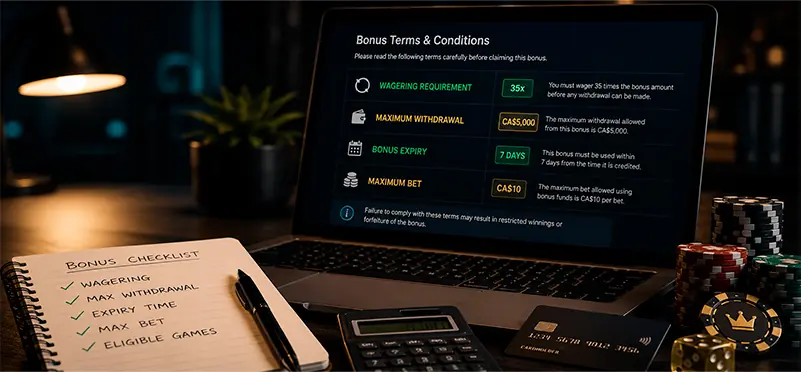
- treating bonus balances like free money
- confusing short-term luck with a strategy
These habits weaken bankroll discipline because they replace planning with impulse.
Practical Bankroll Rules That Make Sessions Easier to Control
Strong bankroll management usually comes down to repeatable rules. A fixed session budget, a preset loss limit, and a clear win-stop point usually make decisions calmer. Time breaks matter as well. A player who stops after a set period is less likely to drift into a longer, unplanned session.
Another useful rule is simple: avoid impulsive redeposits. End the session, review the spending, and step away before deciding anything else. Tracking spending after each session also helps. The goal is not profit analysis; it is a clear view of how much money is actually leaving the budget.
Example Bankroll Plans for Different Budgets
|
Total Budget |
Number of Sessions |
Suggested Session Budget |
Main Goal |
|
CAD 100 |
4 |
CAD 25 |
Keep losses contained and avoid quick depletion |
|
CAD 200 |
4 |
CAD 50 |
Balance session length with spending control |
|
CAD 500 |
5 |
CAD 100 |
Use a larger reserve while keeping fixed session caps |
These are examples, not ideal numbers for everyone. The best plan is the one that fits a person’s real budget and can be followed consistently.
Bankroll Management and Responsible Gambling
Bankroll discipline is part of responsible gambling because it reduces emotional chasing and makes spending easier to monitor. Gambling should remain paid entertainment, not income planning. When someone repeatedly breaks their own loss limits, tops up after every setback, or cannot stop once the budget is gone, that is a warning sign.
Best Practices Before Starting a Session
Use this checklist before playing:
- set a session budget
- define a loss limit
- define a stop point
- choose stake size in advance
- avoid topping up after losses
- stop when the planned budget is gone
A short pre-session routine can prevent many avoidable mistakes later.