
What Casino Odds Really Mean
If you’re just starting your journey into online casinos and real-money betting, you’ve probably come across the phrase “game odds” more than once. Odds may look intimidating at first, but understanding them is one of the most valuable skills you can develop. When you know how odds work, you can instantly see how likely an outcome is and how much you stand to win from your bet.
For many new players, learning about odds can feel overwhelming — especially if numbers aren’t your thing. That’s completely normal. The good news? You don’t need to be a math expert. What matters is getting comfortable with the basics, and once you do, you’ll make stronger decisions, avoid common beginner mistakes, and ultimately increase your winning potential.
To help you get started, here’s a clear, beginner-friendly breakdown of the essentials.
4 Key Things Every Player Should Know About Casino Odds
1. Odds explain the likelihood of an event happening
Whether it’s a slot result, a roulette spin, or a blackjack hand, odds show how probable that outcome is.
2. Odds determine how much you can win
Different games and bets offer different payout levels. Higher risk usually means higher potential rewards.
3. Every casino has an advantage — the “house edge”
This built-in percentage ensures the casino profits over time. It’s completely normal and exists in all online and land-based casinos.
4. Some games allow you to lower the house edge
Table games like blackjack, baccarat, and certain bets in roulette give players more control. Smart strategy can noticeably improve your long-term results.
If you understand these four fundamentals, you’re already ahead of most beginners. From here, you’ll be able to read odds confidently, choose better games, and approach online gambling with real strategy — not just luck.
The House Edge Explained in Simple Terms
Every online casino earns money through a built-in mathematical advantage called the house edge. This edge is present in every single game, from slots to blackjack, and it ensures the casino makes long-term profit. The important part? The house edge is usually very small — often under 10% — and carefully balanced so players can still win meaningful amounts while the casino stays profitable.
Many beginners think casinos are out to beat players on every spin or hand, but that’s not how it works. In the short term, the odds are so close to even that anything can happen — big wins, losing streaks, lucky runs, or long dry spells. This is why players can and do hit jackpots and big payouts.
So how do casinos become billion-dollar businesses? The answer is volume. When thousands of players are betting every minute, the casino’s small house edge applies to millions of rounds, turning a tiny mathematical advantage into consistent, massive long-term profit.
For players, this leads to one important takeaway:
The longer you play a single game, the closer your results will match the house edge.
Short sessions can swing in your favor, but over extremely long play — tens of thousands of bets — the math takes over. That’s why smart players focus on shorter sessions, choosing games with lower house edges, and managing their bankroll, rather than grinding endlessly.
Understanding this principle is key to gambling responsibly and maximizing your chances of walking away a winner.
What Are Betting Odds? (Beginner-Friendly Explanation)
At their core, betting odds are simply a way to measure how likely an event is to happen. When you place a well-considered bet, you’re predicting the outcome — and if that prediction is correct, you win.
Every event has a fixed number of possible outcomes. Take a simple example: rolling a single die. There are six possible results, so the chance of rolling a specific number (like a 3) is:
1 out of 6 → 16.67% probability
This percentage is what betting odds express: the likelihood of something happening and, in many cases, how much you’ll get paid if you’re right.
In online casinos, odds are usually shown in decimal or fractional formats. Both represent the same thing, just in different styles. Here’s how they differ.
Decimal Odds vs. Fractional Odds
Decimal Odds (Most Common Online)
Decimal odds are the format you’ll see most frequently at online casinos. They’re simple, visual, and beginner-friendly, which is why many players prefer them.
- Decimal odds show your total return, including your original stake.
- Example: 2.50 odds means a $10 bet returns $25 in total.
Because they’re easier to interpret, decimal odds tend to feel less intimidating, especially for players new to real-money betting.
Fractional Odds (Traditional Format)
Fractional odds are more common in traditional sportsbooks or UK-style betting.
- They show profit only, not the total return.
- Example: 3/1 means you win $30 profit for every $10 staked.
Neither format is “better.” They just present the same information in different ways. The key is choosing the style that feels most comfortable for you.
Using Fractional Odds to Calculate the Probability of Winning
When you see two numbers separated by a slash — like 10/1 — you’re looking at fractional odds. These odds show the probability of an event happening, and you can calculate it using a very simple formula:
Probability (%) = B / (A + B)
Let’s plug in an example:
Example 1: 9/1 Odds
Using 9/1 in place of A/B: 1 / (9 + 1) = 0.10 → a 10% chance of the event occurring.
Example 2: 1/1 Odds
Using 1/1 in the same formula: 1 / (1 + 1) = 0.50 → a 50% chance of the event happening.
This gives you a clear visual understanding of how fractional odds convert into real-world probabilities.
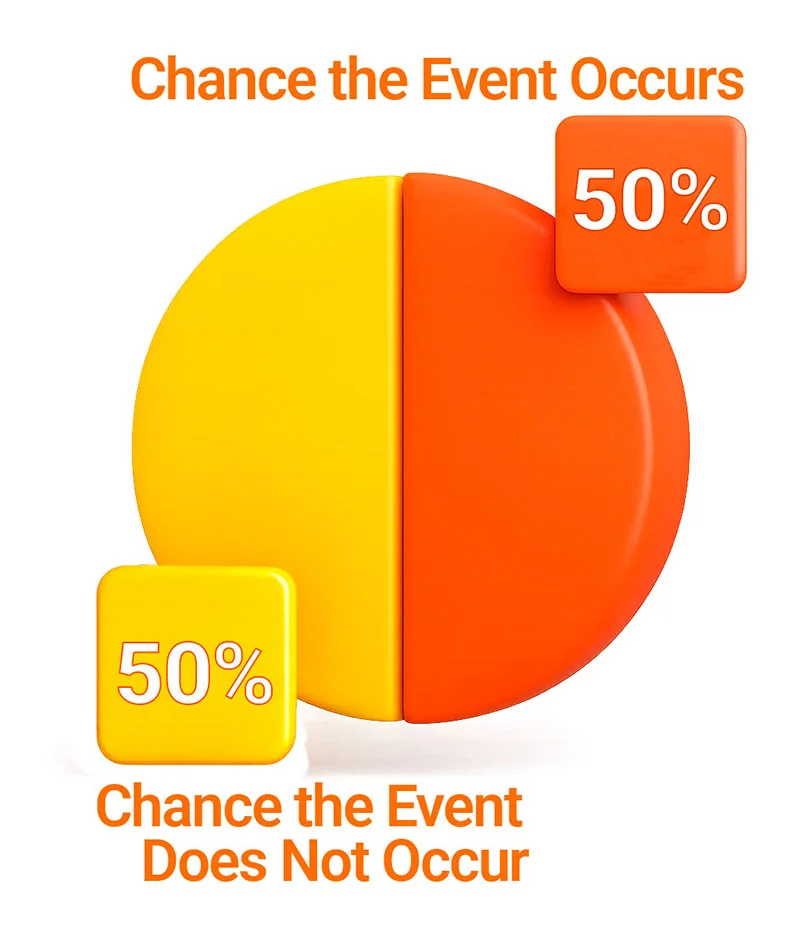
Once you understand how fractional odds convert into percentages, you can easily interpret how likely (or unlikely) an outcome is.
- A represents how much you stand to win.
- B represents your stake.
So fractional odds don’t just describe probability — they describe risk vs reward.
For example, 9/1 means the event is unlikely (10%), but the payout compensates by offering a high win relative to your stake. Meanwhile, 1/1 represents an even match — the event is just as likely to occur as not.
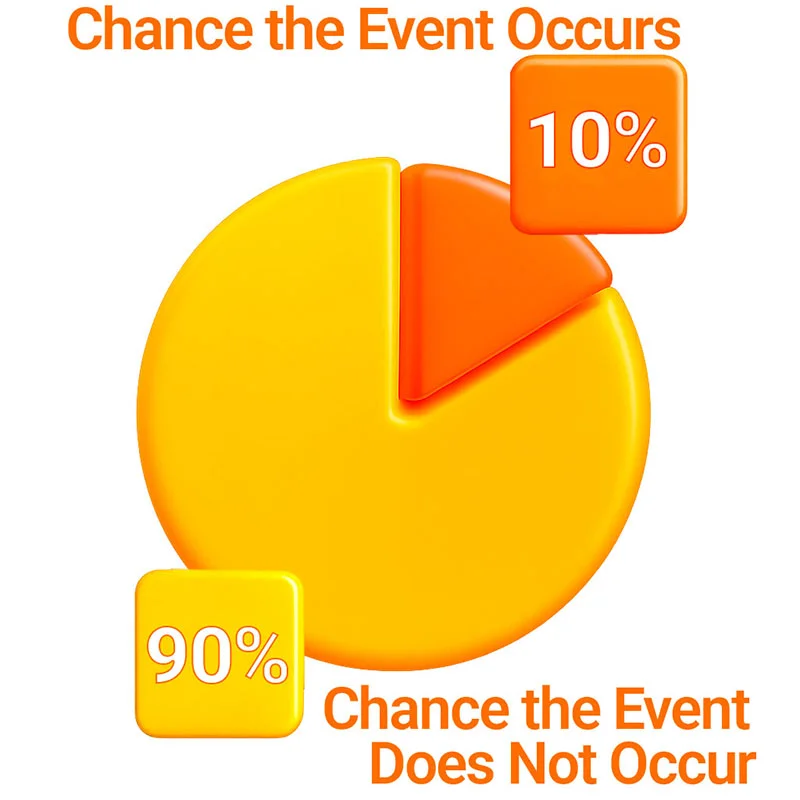
Now let’s break down the potential winnings using the same examples from above:
✔ At 9/1 odds:
For every $1 you stake, you win $9, plus your original $1 is returned. So a $10 bet would pay $90 profit, plus your $10 returned.
✔ At 1/1 odds:
For every $1 you bet, you win $1, and you also get your stake back. A $10 bet pays $10 profit, plus your $10 returned.
Once you understand both the probability and the payout, fractional odds become much easier to use — even for complete beginners.
Using Decimal Odds to Calculate the Probability of Winning
Decimal odds are widely used across online casinos and major sportsbooks such as Betway. They look simple — and that’s because they are. The formula to calculate your winnings is:
Winnings = (Decimal Odds × Stake) – Stake
Here are two quick examples:
- 9.0 becomes: (9.0 × $10 stake) – $10 = $80 profit
- 1.35 becomes: (1.35 × $10 stake) – $10 = $3.50 profit
Decimal odds are popular because they show your total return clearly, making them easier for beginners to understand at a glance.
Understanding Short-Term Play
Earlier, we mentioned that players focusing on short-term play often experience better outcomes. Let’s clarify why that happens.
Some gamblers call this approach “cheating” the house edge — not because you're breaking rules, but because you’re reducing the impact of long-term statistical disadvantage. The idea is simple: the fewer wagers you place, the less time the house edge has to drain your bankroll.
For example:
If you’re playing roulette with a 0.5% house edge and place a $100 “double-or-nothing” bet on red, you don’t slowly lose 50 cents per spin. Instead:
- you either lose $100,
- or win $100 (ending with $200 total).
The actual probability is roughly 49.5%, meaning your chances are almost even. This same principle applies whether you're risking $100 or $1 — the mathematics stay identical.
The key lesson? Limiting the number of bets increases the chance of walking away with profit. And always remember: you should only wager money you can afford to lose. The smartest gamblers know when to stop — ideally while they’re ahead.
Understanding the Grind
The “grind” is every gambler’s silent enemy. It happens when players unknowingly make so many wagers that the house edge eventually overcomes their bankroll.
New gamblers often make one major mistake: they assume the house edge applies to the amount in their account, not the total amount they wager over time.
Here’s why the grind is dangerous:
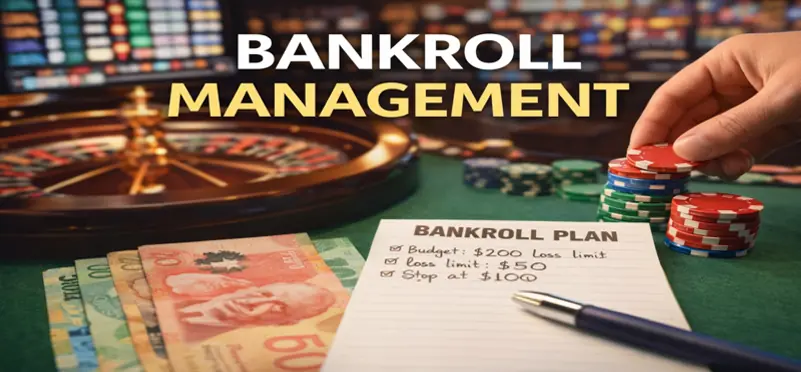
- You may start with the intention of risking only $50…
- but after an hour of blackjack or roulette, you may unknowingly wager hundreds through repeated bets.
- At that point, the house edge eventually catches up — and losses exceed your original bankroll.
How do you avoid this?
- Stick to games with low house edges.
- Limit the number of bets you make.
- Avoid marathon sessions where small disadvantages add up fast.
Casino Games with the Best Odds
Now that you understand how casino odds work, let’s look at the games that offer the strongest chances of winning. The house edge varies by game and sometimes even by table rules, but generally:
Games with the Best Odds:
- Blackjack
- Roulette
- Craps
- Baccarat
- Video Poker
With proper strategy, skilled players can push the house edge as low as 0.5%–1%. However, the average casual player typically faces a 2%–4% house edge because they don’t apply optimal strategies perfectly.
On the other hand:
- Progressive slots
- Certain exotic bets in craps
…can carry a house edge of 8%–15%, sometimes even higher.
Key Points to Keep in Mind:
- Bigger jackpots = bigger house edges.
- Slots offer excitement but some of the worst odds in the casino.
- Blackjack is the only game you can consistently beat with skill.
- Simple even-money bets in roulette (like red/black) remain one of the best risk-controlled options.
Final Thoughts
Every gambler develops their own approach over time. Some players enjoy high-risk plays, others prefer slow and steady sessions, and many rely on smart variance management to extend their bankroll.
If you’re a recreational player, here’s the best advice:
Have fun. Play slowly. Place small bets. Enjoy the entertainment. With this approach, you maximize playtime while risking only a few dollars per hour — and that’s usually the healthiest way to enjoy online gambling.